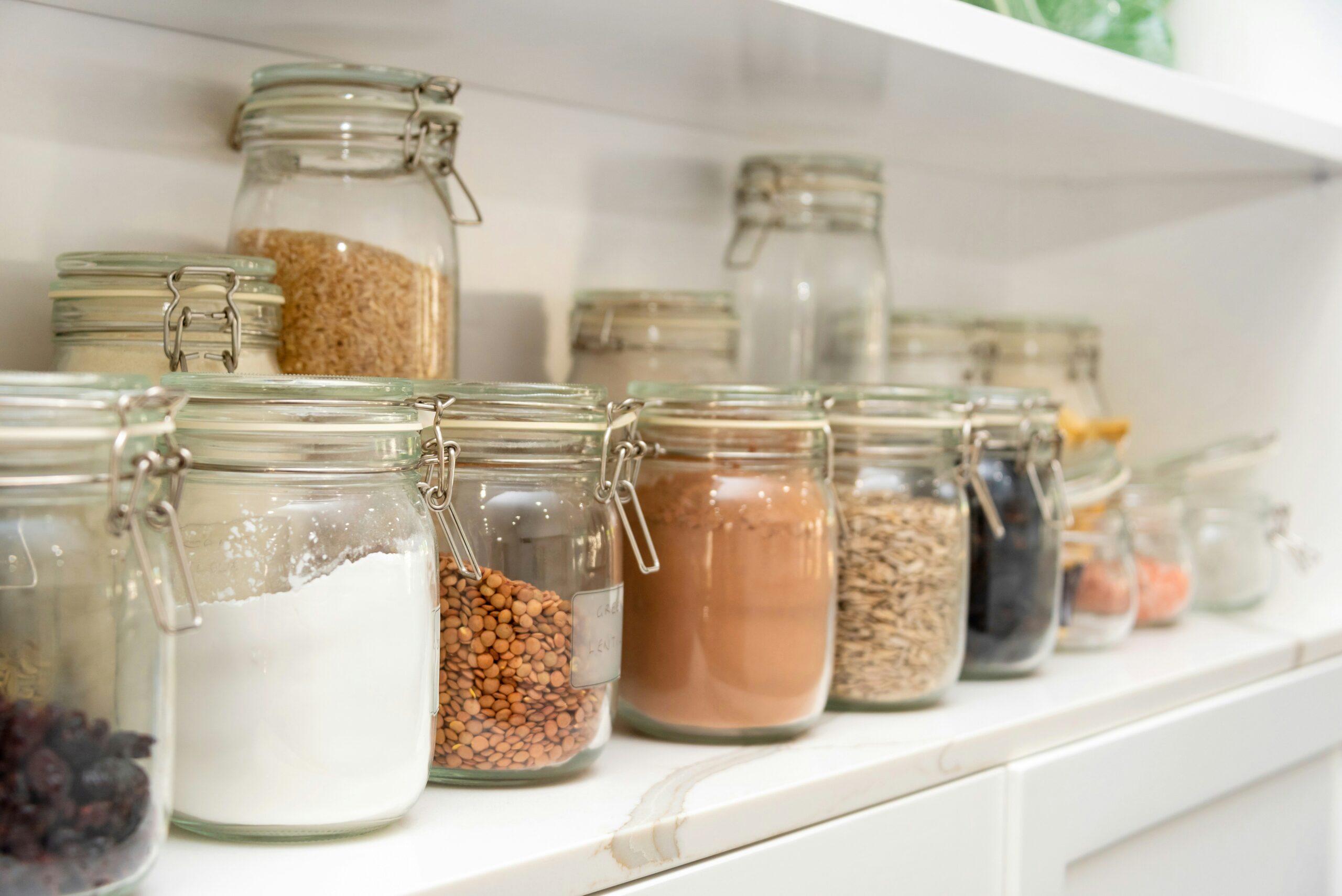
A well-stocked pantry isn’t about perfection. It’s about not having to think so hard.
When you know what you have and where it is, when the staples are always there, you stop making emergency grocery runs at 5 PM. You stop stressing about what’s for dinner because you already have options. You stop feeling like every meal requires a production.
This isn’t about Pinterest-perfect label makers or matching containers in graduated sizes (though if that’s your thing, great). This is about function. About easy wins. About reducing one more decision in your day.
The Pantry Philosophy
Before we get into zones and staples and organization systems, let’s talk about what actually matters:
Stock what you actually use, not what looks good in theory. If you don’t cook with quinoa, don’t buy quinoa just because it feels healthy or virtuous. Your pantry should reflect your real life, not the life you think you should be living.
Organize by how you live, not by how it photographs. The goal isn’t an Instagram-worthy pantry tour. The goal is opening the door and knowing exactly what you have without digging through three shelves of chaos.
Hide the visual clutter so your brain can rest. Not everything needs to be on display. Sometimes the best organization is a curtain that hides the things you need but don’t need to see every single day.
Function over perfection. Every single time. A perfectly organized pantry that’s too precious to use is just another thing to maintain. We’re building systems that support real life, not showrooms.
The Zones That Work
We organize our pantry by zones based on how we actually use it. Not alphabetically. Not by food group. By function.
Zone 1: Supplements & Protein
Keep what you use daily at eye level. Protein powder, supplements, the things you reach for every morning. Simple containers with minimal labels. Grab and go without digging through shelves or moving other things out of the way.
Zone 2: Snack Zone
Nuts, dried fruit, the things kids (and let’s be honest, you) reach for between meals. Clear containers so you can see what’s running low at a glance. This is where OXO containers earn their keep – you can see exactly how much is left, which means you restock before you’re completely out and someone’s melting down because there are no snacks.
Zone 3: Dried Goods
Rice, pasta, dried beans, flour, pancake mix, tortilla mix. The backbone of quick meals. These live in OXO containers too – they keep everything fresh, stackable, and visible. No more mystery bags shoved in the back. No more buying pasta you already have because you couldn’t see it.
Zone 4: Canned Goods (Lower Shelves)
Tomato sauce, diced tomatoes, bone broth, coconut milk, tuna. The things you reach for when you need dinner fast and the fridge is looking sparse. Stack them by type. Label the shelves if it helps. The key is knowing what you have so you’re not buying duplicates or running out at the worst possible time.
Zone 5: Spices on the Wall
All spices visible and organized on the wall. Bulk backstock stored separately. When you can see it, you use it. When it’s buried in a drawer or stacked three deep, it might as well not exist. Get them on the wall. Label them if you need to. Make them accessible.
What We Always Keep Stocked
Here’s the actual list of what lives in our pantry at all times. Not aspirational. Not theoretical. These are the things that make weeknight dinners and weekend pancakes and snacks and last-minute meals possible without a grocery run.
Grains & Carbs:
Rice, pasta, flour, pancake mix, tortilla mix
Proteins:
Dried beans, tuna, powdered peanut butter
Flavor Builders:
Bone broth, tomato sauce, diced tomatoes, coconut milk, backstock of spices in bulk, salt
Baking Essentials:
Instant active yeast, unsweetened chocolate
Snacks:
Nuts, dried fruit
Simple. Reliable. Always there.
These aren’t fancy. They’re foundational. And when you have these on hand, you have options. Rice and beans. Pasta with tomato sauce. Tuna pasta. Pancakes for dinner when nothing else sounds good. The pantry staples aren’t about gourmet cooking, they’re about having a baseline so you’re never starting from zero.
Hide the Visual Clutter
Here’s the thing no one tells you about pantry organization: sometimes the best solution is hiding things.
We use a French curtain to hide appliances and Tupperware and Corningware that’s not in active rotation. Out of sight, out of mind. Your pantry doesn’t need to display everything. Just what you’re actively using.
Visual clutter is real clutter. Even if it’s organized, even if it’s functional, if it’s making your brain work harder every time you open the door, it’s worth considering what could be tucked away. A simple curtain. A closed basket. A shelf you can’t see from the doorway.
This isn’t about hiding mess. It’s about reducing visual noise so you can actually think clearly when you’re trying to figure out what’s for dinner.
The Truth About Pantry Organization
It’s not about the aesthetic. It’s about opening the door and knowing exactly what you have.
It’s about making dinner without a grocery run because you’ve already got the basics covered.
It’s about one less thing to figure out. One less decision to make. One less reason to feel like you’re failing at something as basic as feeding your family.
Your pantry doesn’t need to look like a magazine spread. It needs to work for your life. And if that means mismatched containers and a curtain hiding the appliances and a system that makes sense to exactly no one but you, that’s exactly right.
What’s one pantry staple you always keep stocked? I’d love to hear what makes your life easier.
For more resets that make life easier, download our House to Home Easy Resets guide. Pantry essentials linked on my ShopMy page.
+ view the comments