The 3-5pm window used to feel like controlled chaos. Now it feels like breathing room.
Here’s what changed: We pulled our kids out of extra sports this semester.
Not because sports are bad. Not because we’re anti-activity or anti-competition or trying to raise kids who never work hard at anything. But because we were stretched thin and rushing 3-4 days a week from 330-630, and it was eating up the time between homework, dinner, and bedtime.
We noticed our capacity to have friends over for dinner had drastically diminished. We were always rushing someone out the door to practice. Always stressed about getting dinner on the table fast enough that we could eat and still make it to the bedtime routines together meaningful. Tired from the constant logistics of who needs to be where and when.
So we sat down and measured the fruit of what we were gaining versus what we were giving up.
And we chose margin.
The Decision to Pull Back
This isn’t a post about how everyone should quit sports or stop doing activities. Some families thrive on busy schedules. Some kids genuinely love their activities and have the capacity for them without it affecting the rest of family life.
But if you’re reading this and feeling stretched thin, if dinner feels rushed every night, if there’s no time to just be together without an agenda, I want you to know it’s okay to say no.
Even to good things. Even to things other families are doing. Even in seasons when everyone else is saying yes. And that’s just it, maybe it’s just for a season.
You get to measure the fruit for your own family. You get to decide what’s sustainable and what’s not. You get to protect margin even when the culture around you is celebrating busy.
What We Gained Back
When we cleared those 3-4 afternoons a week, here’s what showed up in the space:
Family walks after school. Just around the neighborhood. Nothing extraordinary. Just time together moving our bodies and talking about the day.
Time at the park. Unstructured, unscheduled, unhurried. The kind of play that happens when kids have margin to be bored first.
Bike rides. Sometimes with friends, sometimes just us. Sometimes to nowhere in particular.
Slow dinner prep with kids helping. When you’re not rushing to get out the door, they can actually stand on the stool and stir the sauce or tear the lettuce for the salad. It takes longer, but it’s not stressful.
Friends over for dinner again. This was the thing we missed most and didn’t realize it had stopped. The spontaneous “want to come over after school?” invitations that had disappeared because we were always rushing somewhere else.
Margin to breathe. The thing you don’t realize you’re missing until you get it back. The space to not be rushed. To not be optimizing every hour. To just exist as a family without a schedule demanding the next thing.
The Snack Board That Saves Afternoons
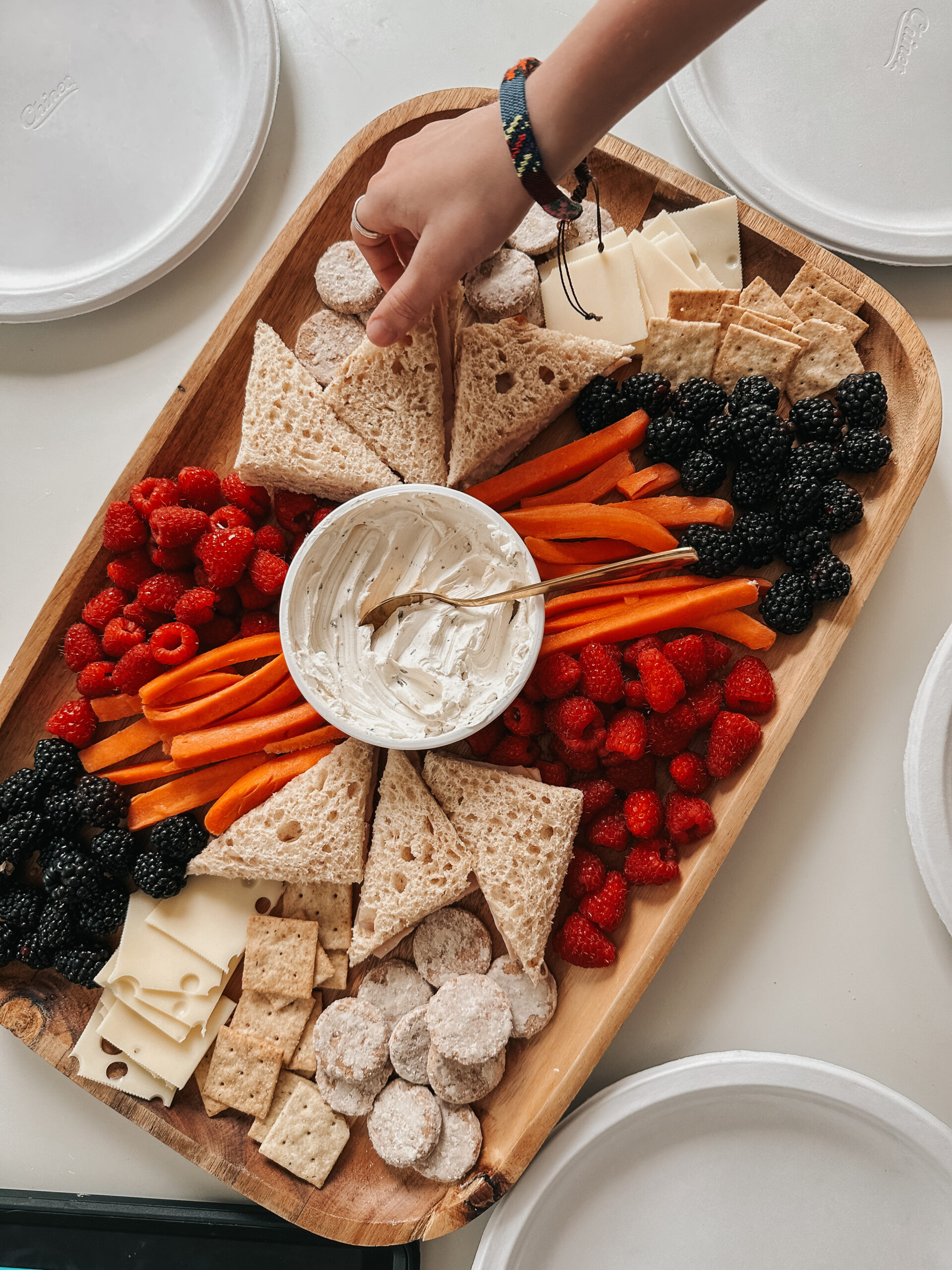
Here’s the practical piece that makes the 3-5pm window actually work: snack boards.
The formula is simple: something sweet + something savory + fruit (and vegetables if you’re feeling ambitious or if you have a kid who actually eats raw vegetables willingly).
Set it out when they walk in the door. Give them 30-45 minutes to snack and decompress. No rushing to homework. No rushing to the next thing. Just refueling after a long day at school.
Our Go-To Snack Boards:
Snack Board #1:
Chocolate covered pretzels, chicken and apple sausage, fruit (grapes, apple slices, berries), carrots with ranch
Snack Board #2:
Cheese cubes, crackers, salami or pepperoni, strawberries and blueberries, hummus with cucumbers
Snack Board #3:
Graham crackers with peanut butter, turkey roll-ups, oranges or clementines, bell pepper strips
The Friend-Over Favorite:
Popcorn on the stove (make it with them, it’s an event), fresh fruit on the side. Simple. Fun. They love it every time.
The beauty of snack boards is that there’s no decision fatigue. You’re not asking “what do you want for a snack?” and fielding four different requests. You’re setting out options and letting them graze. It’s communal. It’s easy. They share well. It keeps them full enough that they’re not melting down before dinner but not so full that they won’t eat dinner.
The Rhythm After Snacks
After those 30-45 minutes of decompression, we move into the next part of the afternoon.
Homework, if they have any. And here’s the thing: when they’ve had time to snack and decompress first, homework goes faster. They’re not fighting it because they’re hangry or exhausted. They’ve had a chance to reset.
If there’s no homework, they go outside or play games. Unstructured time. Boredom is beautiful.
We walk the dog. Sometimes all together, sometimes one kid volunteers and gets one-on-one time with a parent. It’s movement, fresh air, conversation.
Dinner prep starts around 5:30. Not rushed. Not stressful. Just the steady work of making a meal while the kids are occupied and settled. Classical music always on. Board games inevitably come out on the dining room table. It’s the kind of ease we have been craving.
Steady. Breathable. Nervous system reset.
The Truth About Afternoon Transitions
The afternoons that feel easiest aren’t the busiest ones.
They’re the ones with margin. With time to transition from school to home without rushing to the next thing. With snacks and space to breathe and the freedom to say no when you need to.
This doesn’t mean your afternoons have to look like ours. Maybe your family thrives on activities and structured time. Maybe your kids genuinely need that outlet and you’ve found a rhythm that works.
But if you’re reading this and feeling like you’re constantly rushing, constantly tired, constantly stressed about getting everyone where they need to be, I want you to know you have permission to pull back.
You have permission to measure the fruit. To ask what you’re gaining and what you’re giving up. To choose margin over more, even when it feels countercultural.
The goal isn’t an empty calendar. The goal is a sustainable rhythm. One that supports connection instead of exhaustion. One that leaves room for spontaneity and rest and the slow, steady work of raising kids who know how to just be.
What does your afternoon rhythm look like right now? Does it feel sustainable?
If the answer is no, what would it look like to choose one thing to let go of? Not forever. Just for this season. Just to see what shows up in the space.
House to Home guide available in bio. Snack board essentials linked on my ShopMy page.
+ view the comments